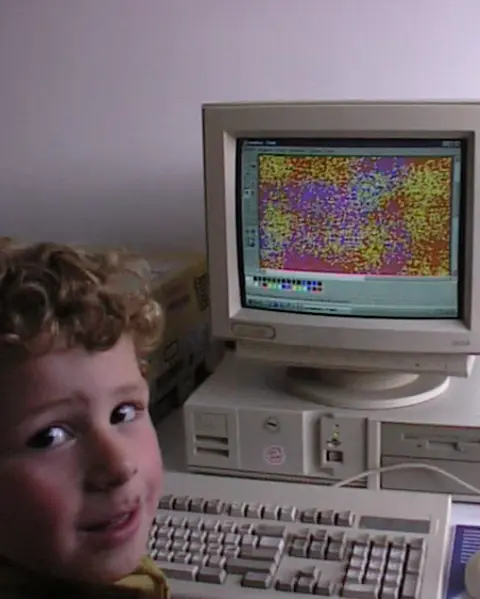
▶Who is behind BVDART?
BVDART is a generative art practice exploring the intersection of mathematics, algorithms, and visual aesthetics. Each artwork begins as custom code — convolution kernels, noise functions, cellular automata, and fractal algorithms are assembled into unique computational pipelines. The resulting output is refined through dozens of manual iterations and produced as a professional giclée print on archival paper. The practice builds on over 60 years of computational art history.
▶How are these artworks created?
Every artwork is generated algorithmically — using code rather than traditional drawing tools. Techniques include convolution kernels, Perlin noise, fractal mathematics, cellular automata, and dithering algorithms. The results are then curated and refined through many iterations.
▶What are the 4 stages of BVDART's creative pipeline?
BVDART creates each artwork through four sequential stages: (1) Source — raw material acquisition from vintage cameras, algorithmic noise generators, hand-drawn marks, and public domain imagery; (2) Engineer — custom algorithm design combining convolution kernels, fractals, cellular automata, and color quantization into unique generative pipelines; (3) Processing — iterative refinement using a proprietary 128-key software panel to shape color, composition, and fine detail across dozens of iterations; (4) Produce — professional giclée printing on archival-grade paper with colour calibration, quality control, and worldwide shipping. Each stage is fully documented in the Process section.
▶What is algorithmic abstract art?
Algorithmic abstract art is created by writing custom computer programs that generate visual compositions. Rather than drawing directly, the artist designs the rules — mathematical functions, color transformations, and noise patterns — that determine the final image. The practice builds on over 60 years of computational art history: pioneers Vera Molnár (b. 1924, Hungary) and Manfred Mohr (b. 1938, Germany) established computational methods as serious artistic practice in the 1960s. Today the field encompasses generative design, procedural art, and creative coding, employing the same mathematical principles used in scientific visualisation and signal processing.
▶What is giclée printing and why does BVDART use it?
Giclée (from the French for 'to spray') is a professional fine-art inkjet printing process using archival pigment inks on acid-free cotton rag or fine art paper. It produces the widest colour gamut of any print method and is rated to last 100+ years without fading under normal display conditions. BVDART uses giclée printing because algorithmic artworks contain subtle colour gradients and fine mathematical detail that require the precision and tonal range only archival inkjet can provide. Each print is produced to museum reproduction standards.
▶Do you accept custom commissions?
Custom algorithmic artworks can be created on request. This includes choosing specific techniques, colour palettes, aspect ratios, and resolutions. Use the Contact page to discuss your project.
▶Can I use the artworks for my own projects?
The artworks are copyrighted. Physical prints can be purchased through the Shop. For digital licensing, commercial use, or collaboration inquiries, please use the Contact page.